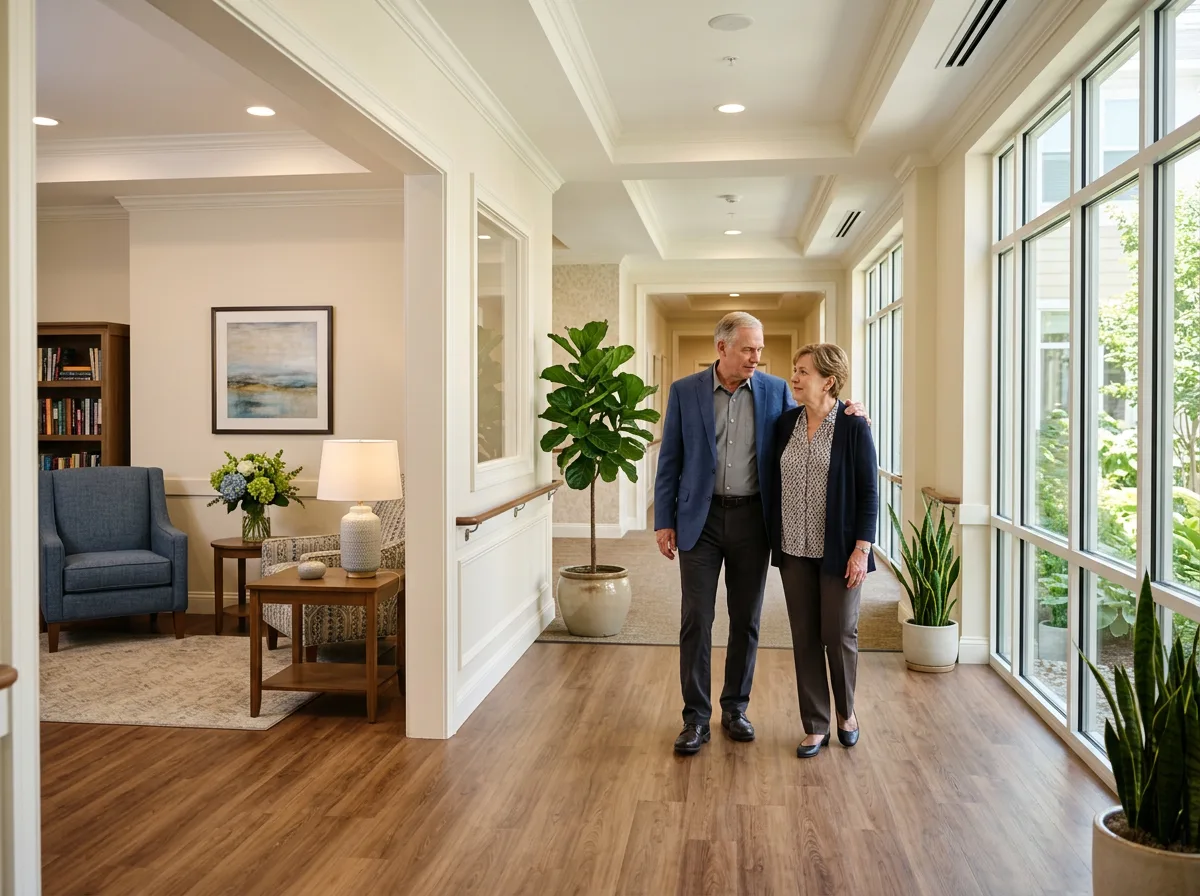
The question most families arrive with is some version of this: “How do I know if this is the right place?” Touring assisted living or memory care communities is one of the most useful steps in answering it, but only if you know what to pay attention to. A polished lobby and a friendly admissions coordinator are easy to find. What takes more effort to read is whether a community’s day-to-day rhythms, staffing approach, and physical environment are genuinely suited to your loved one’s needs. We’ll walk you through the key factors to observe and the questions worth asking before making a decision.
Before You Schedule: Get Clear on What You’re Evaluating
Assisted living and memory care serve different needs, and the tour experience for each reflects that. Assisted living supports residents who benefit from help with daily activities like bathing, dressing, or medication management, while still living with a meaningful degree of independence. Memory care is a more specialized setting designed for people living with Alzheimer’s disease or other forms of dementia, with staff training, physical layouts, and programming built around cognitive support.
If you’re still weighing which level of care fits your loved one’s situation, knowing how memory care differs from assisted living can help you approach each tour with clearer priorities. It shapes the questions you ask, the support you look for, and the details that deserve the most attention.
What To Observe During the Tour

A tour is as much about what you notice on your own as what you’re shown. Pay attention to how staff interact with residents when they don’t know anyone is watching. Are interactions warm and unhurried, or do staff seem stretched thin? Do residents appear engaged, or are they largely sitting alone without activity or conversation?
The physical environment matters, too, particularly for memory care. Layouts that are easy to navigate, good natural light, and calm common areas all contribute to a resident’s daily experience. For a dementia care community specifically, look for design features that reduce disorientation: clear wayfinding, secure outdoor spaces, and areas that feel homelike rather than institutional.
Dining is worth observing directly if you can. How meals are served, whether residents have choices, and the general atmosphere in the dining room tell you a lot about how a community treats the small, repeated moments that make up daily life.
Questions To Ask on an Assisted Living Tour
When touring an assisted living community, the most useful questions are the ones that reveal how care actually works day to day, not just how it’s described in a brochure. Consider asking:
● How are care plans developed, and how often are they reviewed or updated?
● What happens if a resident’s needs increase over time? Is there a process for adjusting care in place, or would they need to move to a different community?
● What is the staff-to-resident ratio during the day, and how does that change overnight?
● How does the community handle a medical concern that arises outside of regular hours?
● What does a typical day look like for a resident? What activities and social opportunities are available?
● How does the team communicate with family members about a resident’s wellbeing?
Questions To Ask on a Memory Care Tour
Evaluating memory care requires a somewhat different set of questions, because the specialized nature of dementia care means staffing, training, and programming all play a larger role. When visiting a memory care community, ask:
● What specific training do staff receive in dementia care, and is that training ongoing?
● How does the community handle behavioral changes, such as increased agitation or sleep disruption, that are common in dementia?
● What does the activity programming look like, and how is it adapted for residents at different stages of memory care progression?
● How are families included in care planning and kept informed of changes in a resident’s condition?
● What is the community’s approach to supporting residents who have limited verbal communication?
Pay attention not just to the answers, but to how staff respond to these questions. Comfort with the topic, willingness to be specific, and a tone that reflects genuine familiarity with dementia care are all good indicators.
What the Amenities Tell You, and What They Don’t
A well-appointed community with appealing common spaces and a robust activity calendar is a good sign, but amenities alone don’t define the quality of care. The community amenities that matter most are the ones that support daily life in concrete ways: dining that offers real choice, outdoor spaces that residents can actually use, and programming that reflects residents’ interests rather than a generic template.
Ask how activities are chosen and whether residents have input. A community that adjusts its programming based on who is actually living there tends to reflect a broader culture of listening to residents rather than simply managing them.
Bringing Your Loved One Along
If your loved one is able to participate in the tour, their reaction to the environment carries real weight. Do they seem at ease or visibly uncomfortable? Do they connect with any staff or residents they encounter? Even for someone who may not fully understand the purpose of the visit, their emotional response to a space is worth paying attention to.
For families talking to aging parents about assisted living, the way the tour is introduced can make a meaningful difference, especially if there has been resistance to the idea. Framing the visit as a shared exploration rather than a decision that has already been made can help your loved one feel more involved and more comfortable with the process.
After the Tour: How To Compare What You Saw
After visiting more than one community, impressions can blur together. Taking notes during or immediately after each tour helps. Focus on the specifics: how staff spoke to residents, whether your questions were answered directly, how the dining room felt, and what the overall pace of the day seemed to be.
Weighing those observations alongside the practical details, including care model, staffing ratios, and how the community handles changing needs, gives you a more complete picture than any single factor alone. Saga Senior Living communities are designed around exactly these considerations. You can browse Saga Senior Living locations to find a community near you and schedule a tour with a team that is prepared to answer your questions directly and walk you through what daily life actually looks like for residents.


Independent Living Explained: Is It the Right Fit?

Paying for Assisted Living: A Family Guide to Costs and Options

Understanding the Difference Between Assisted Living and Memory Care

